The Keffiyeh
Heritage · Resistance · Identity
More than fabric. More than pattern. The keffiyeh carries five thousand years of human story — from the windswept deserts of ancient Mesopotamia to the streets of the world. Now, wear it.
"The keffiyeh is not merely cloth — it is memory woven into pattern, resistance stitched into every thread, identity carried across five thousand years."
The Story Behind the Pattern
Born in the Ancient
Cradle of Civilisation
The keffiyeh traces its origins to ancient Mesopotamia, circa 3100 BCE — one of the earliest civilisations on Earth. From its very first appearance, it was never merely cloth. It was a declaration of dignity, a shield against the elements, and a symbol of who you are and where you come from.
Adopted by the Bedouin peoples of the Arabian Peninsula, it became an essential tool for survival — protection from searing sun, blinding sandstorms, and desert cold. Wrapped and rewrapped, it served as shade, water filter, carrying cloth, and identifier among tribes.
But the keffiyeh transcended utility. During the Arab Revolt of 1936–39, Palestinians wore it to conceal their identities and signal solidarity. After the Nakba of 1948, it became an unspoken language — the black-and-white pattern saying everything that words could not.
Through the decades, figures like Yasser Arafat elevated it into a globally recognised symbol of Palestinian identity — seen in halls of power, on the streets of cities worldwide, and printed on the covers of history itself.

The Fishing Net
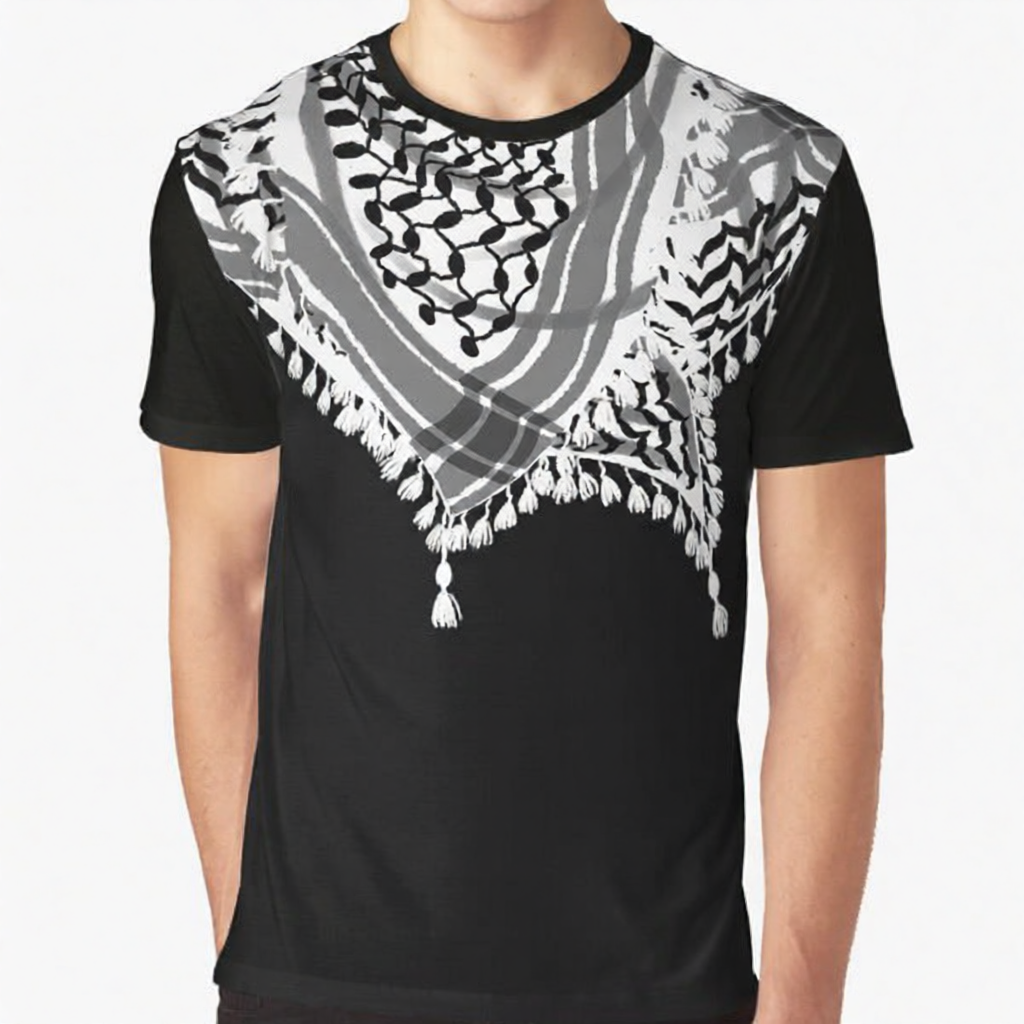
The central diamond lattice represents the fishing nets of coastal communities — a symbol of livelihood, connection to the sea, and the fundamental human right to move freely across land and water.

The Olive Leaf Border

The Stripe Lines
Originally mapping ancient trade routes that connected civilisations across the Arab world — today, those stripes have deepened in meaning, reflecting the ongoing struggle of Gaza and the resilience of its people.
"Heritage. Resistance. The pursuit of justice with dignity.
This is what every pattern carries."
A Living Timeline
- 1
3100 BCE
he keffiyeh emerges as a symbol of dignity, protection, and social identity in one of humanity's earliest civilisations. - 2
Medieval
Desert nomads adopt the keffiyeh as practical protection against sun, sandstorms, and cold — a tool of survival. - 3
1936
Palestinian rebels wear the keffiyeh to conceal identity and express collective resistance. A garment becomes a shield. - 4
1948
Following the displacement of hundreds of thousands, the keffiyeh becomes a symbol of identity, memory, and perseverance. - 5
1960s
Yasser Arafat's iconic keffiyeh brings the symbol to world stages — the UN, world capitals, and the front pages of history. - 6
Today
The keffiyeh travels the world as a declaration: heritage endures, resistance continues, and dignity is non-negotiable.
What Every Element Means
Ten Truths Woven Into One
Our team consists only of highly qualified specialists with at least 10 years of experience.
Ancient Roots
Origins in ancient Mesopotamia, circa 3100 BCE — symbolising dignity, protection, and social identity since the dawn of recorded civilisation.
Bedouin Practicality
Worn by desert nomads as protection from sun, sandstorms, and cold — a tool of survival that became a way of life.
Regional Identity
Colours and patterns vary across the Arab world. The black-and-white pattern is most powerfully associated with Palestine.
Symbol of Unity
During the 1936–39 Arab Revolt, it was worn to conceal identity and declare collective resistance against colonial rule.
Post-1948 Significance
After the Nakba, the keffiyeh emerged as the enduring symbol of Palestinian identity, memory, and perseverance.
Global Recognition
Through Yasser Arafat and beyond, the keffiyeh became internationally recognised from the 1960s onward as a symbol of a people.
The Fishing Net
The central lattice represents livelihood, connection to the sea, and the right to free movement — the most essential of human rights.
The Olive Leaf
The border of olive leaves symbolises peace, sabr (patience), resilience, and a people’s unbreakable tie to their ancestral land.
The Stripe Lines
Originally representing ancient trade routes between civilisations — now carrying the weight of Gaza’s ongoing story and struggle.